


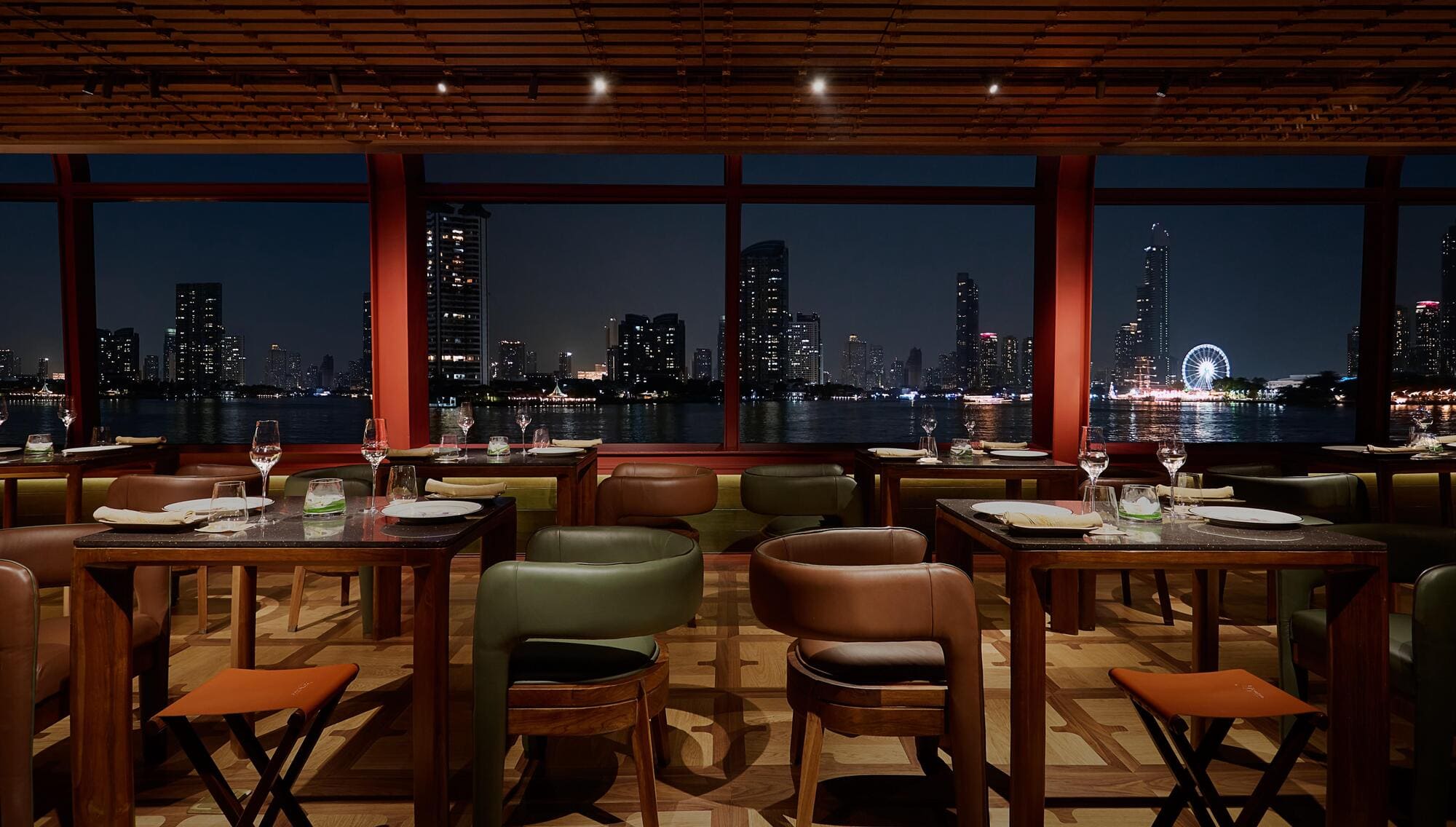
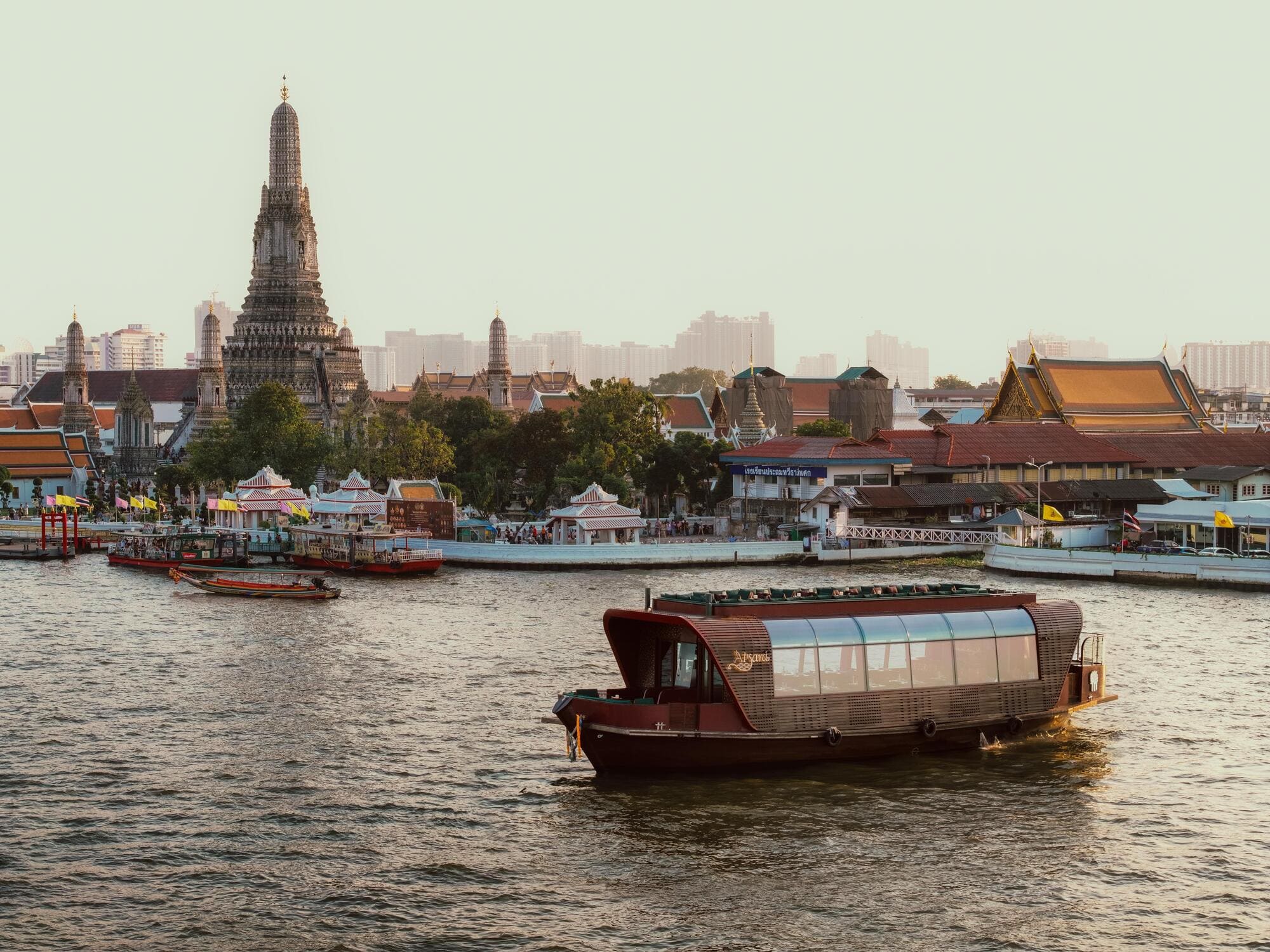
In the bustling heart of Bangkok, the Chao Phraya River and its countless waterways continue to serve as vital arteries for the capital’s daily commutes and cargo transport to this day. In contrast to the city’s innovative skyscrapers, historical monuments—such as the Temple of Dawn, The Grand Palace, and Fort Phra Sumen —preserving three centuries of water-laced heritage stand along the riverbanks.
The riverboat now known as Apsara Cruise once journeyed the Chao Phraya River as a rice barge from the ancient Ayutthaya era, before Bangkok became the capital, transporting rice, sugar, and other trade goods between large ships and riverside warehouses.
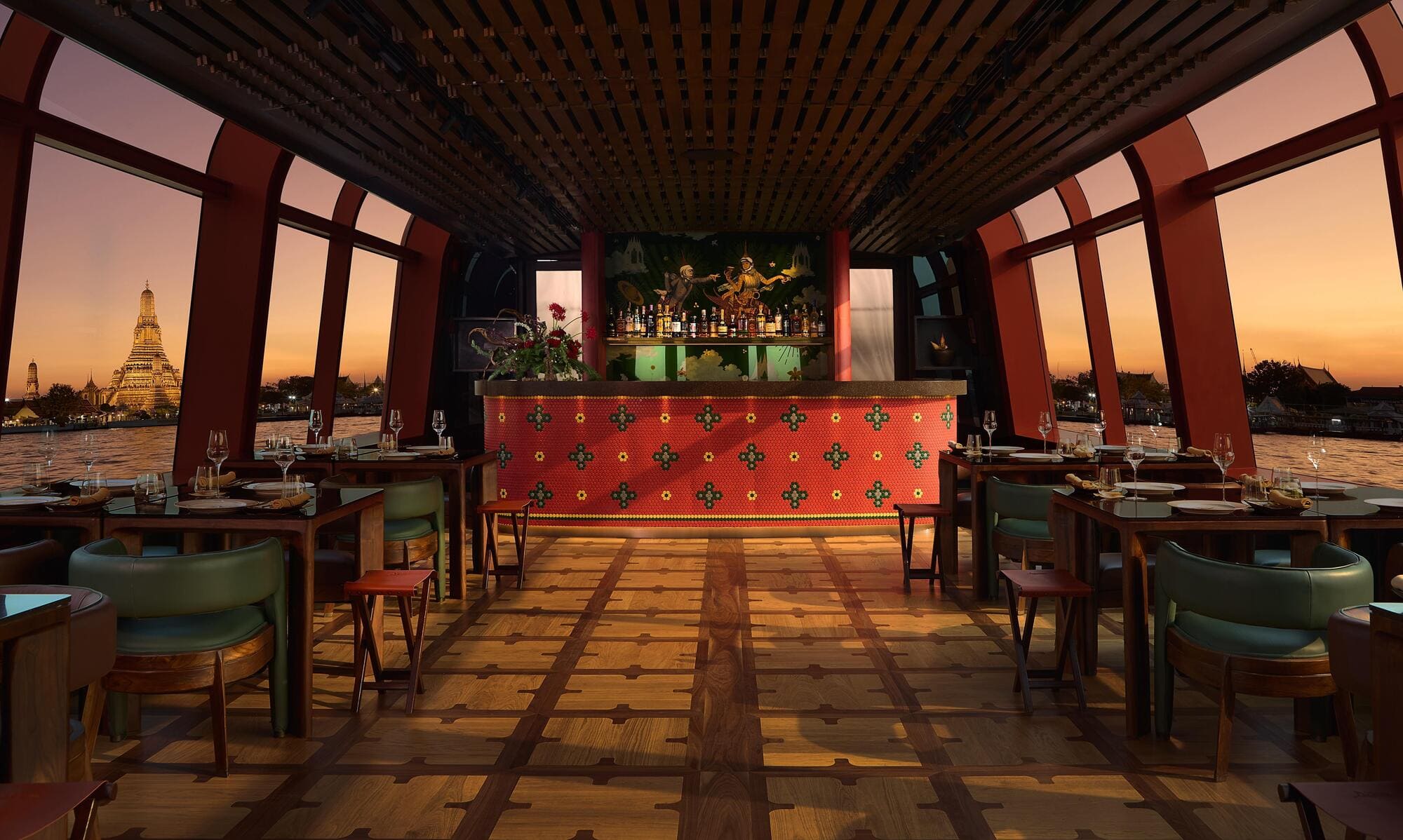
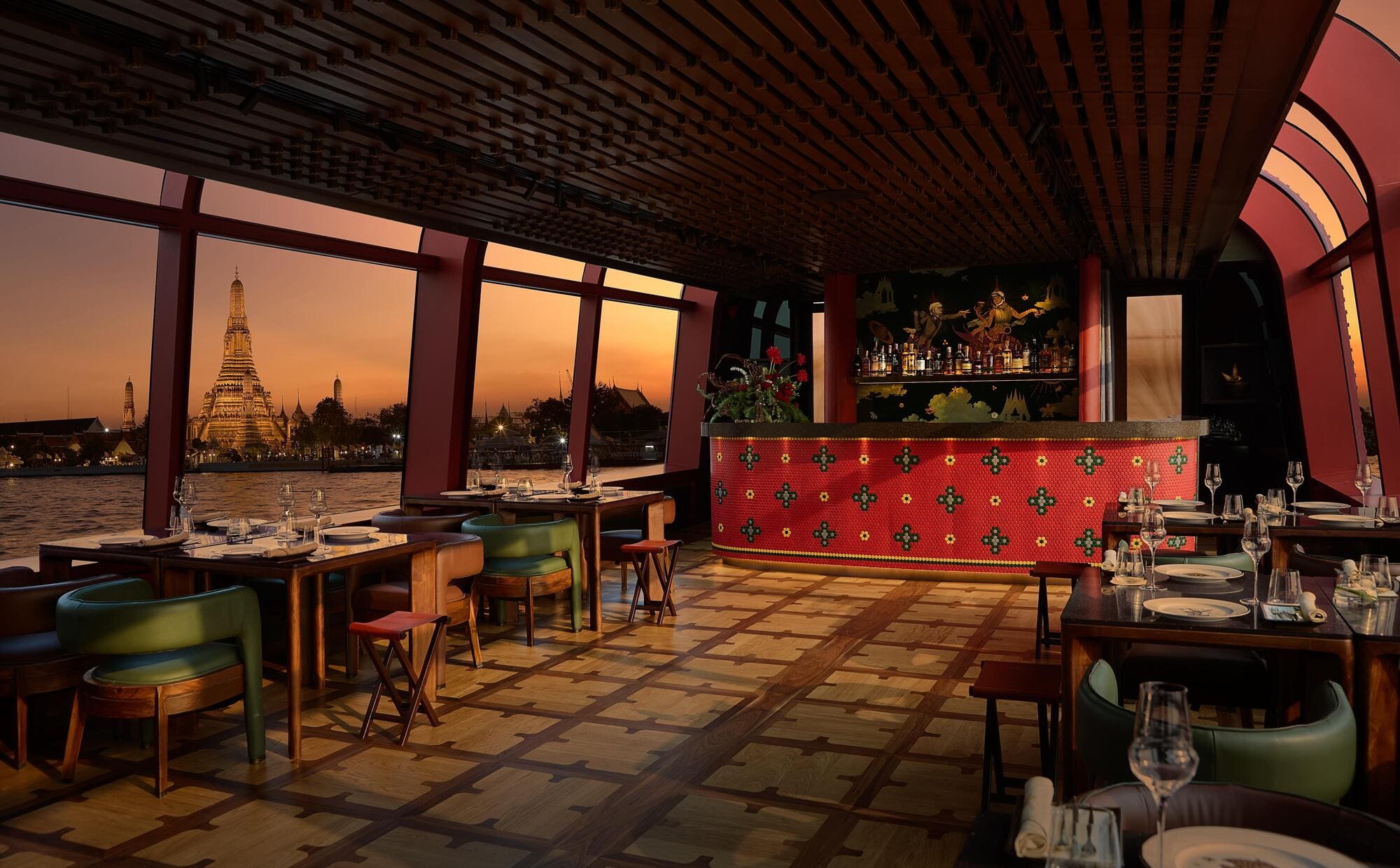
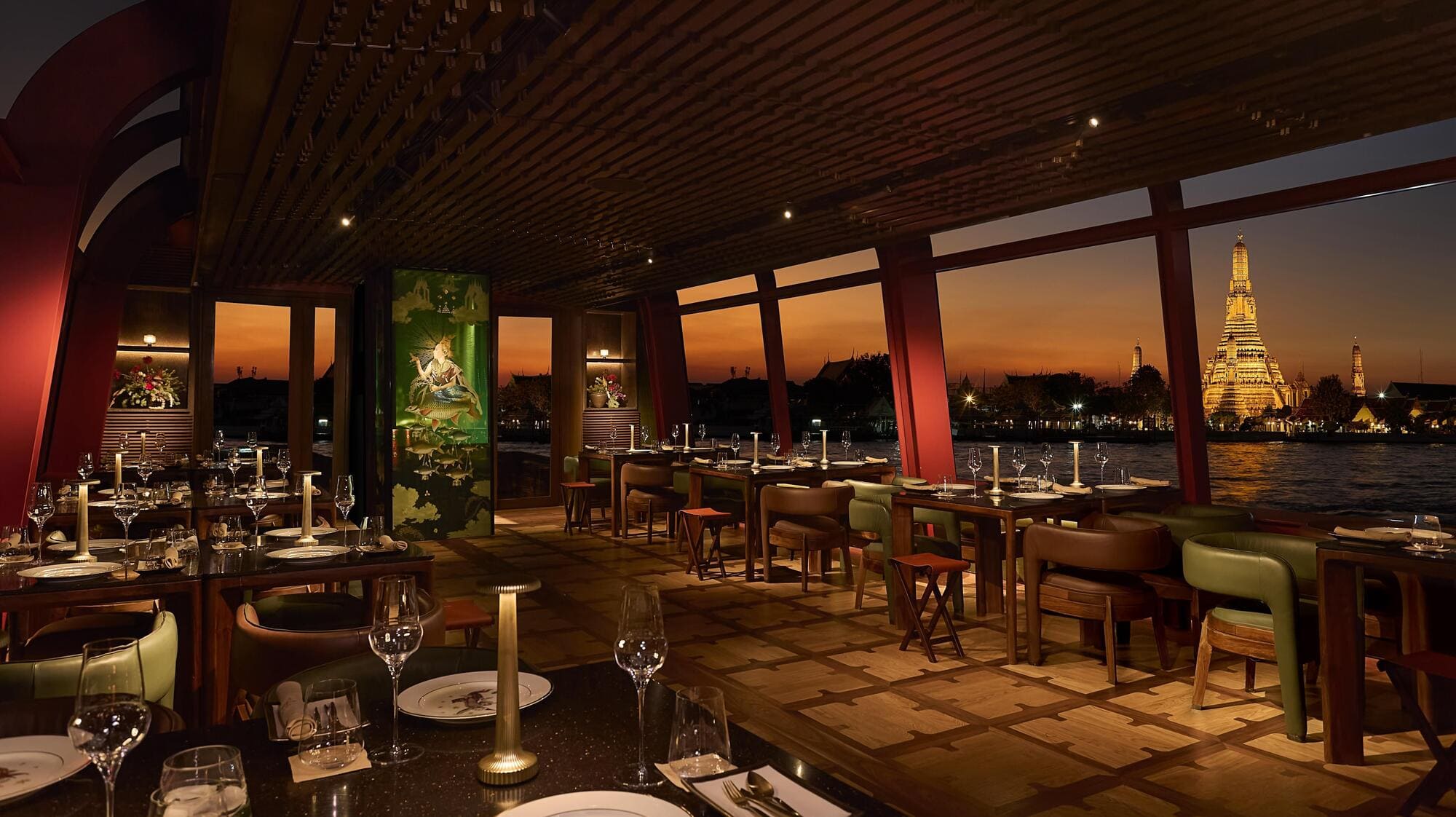
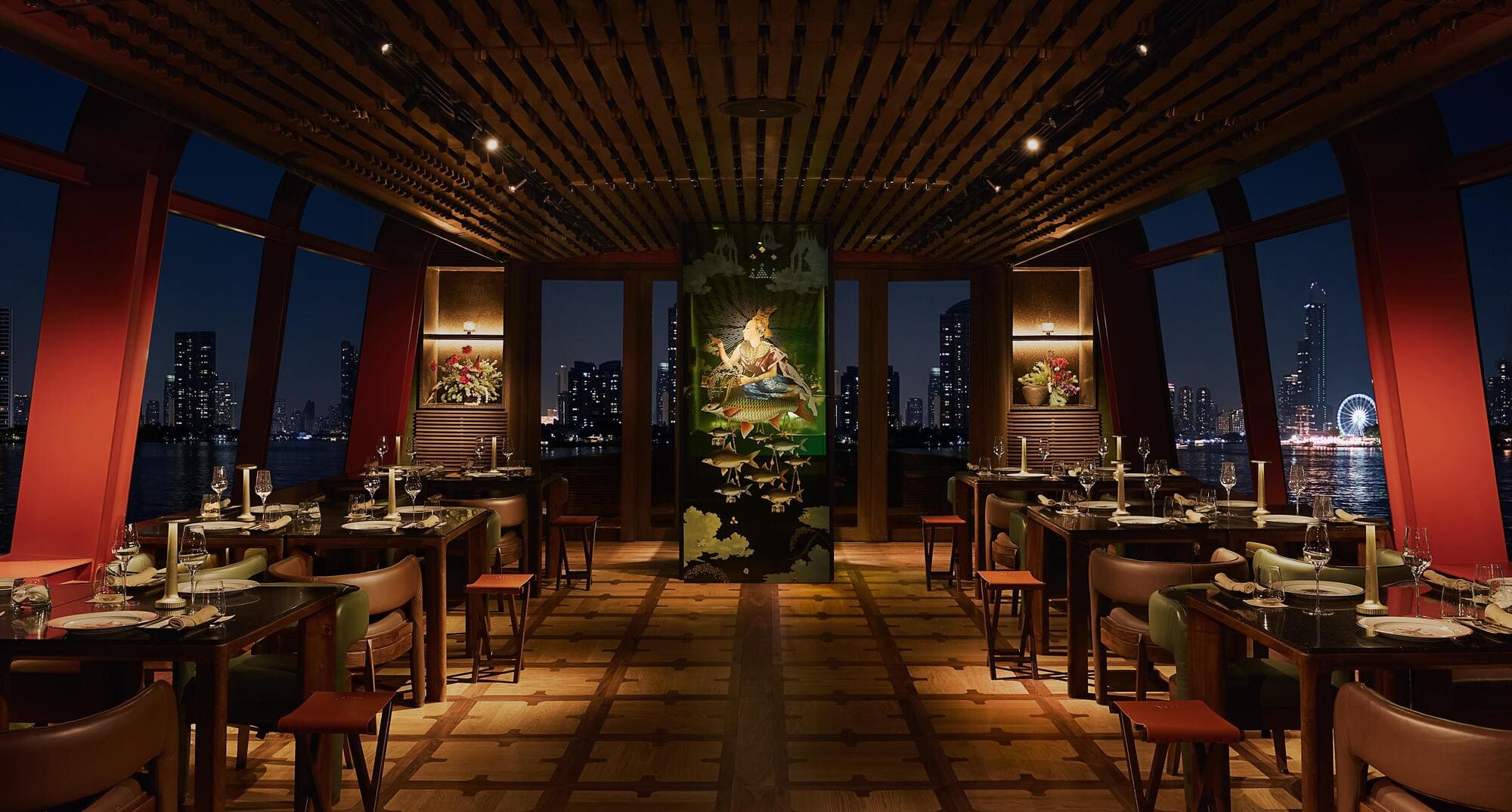
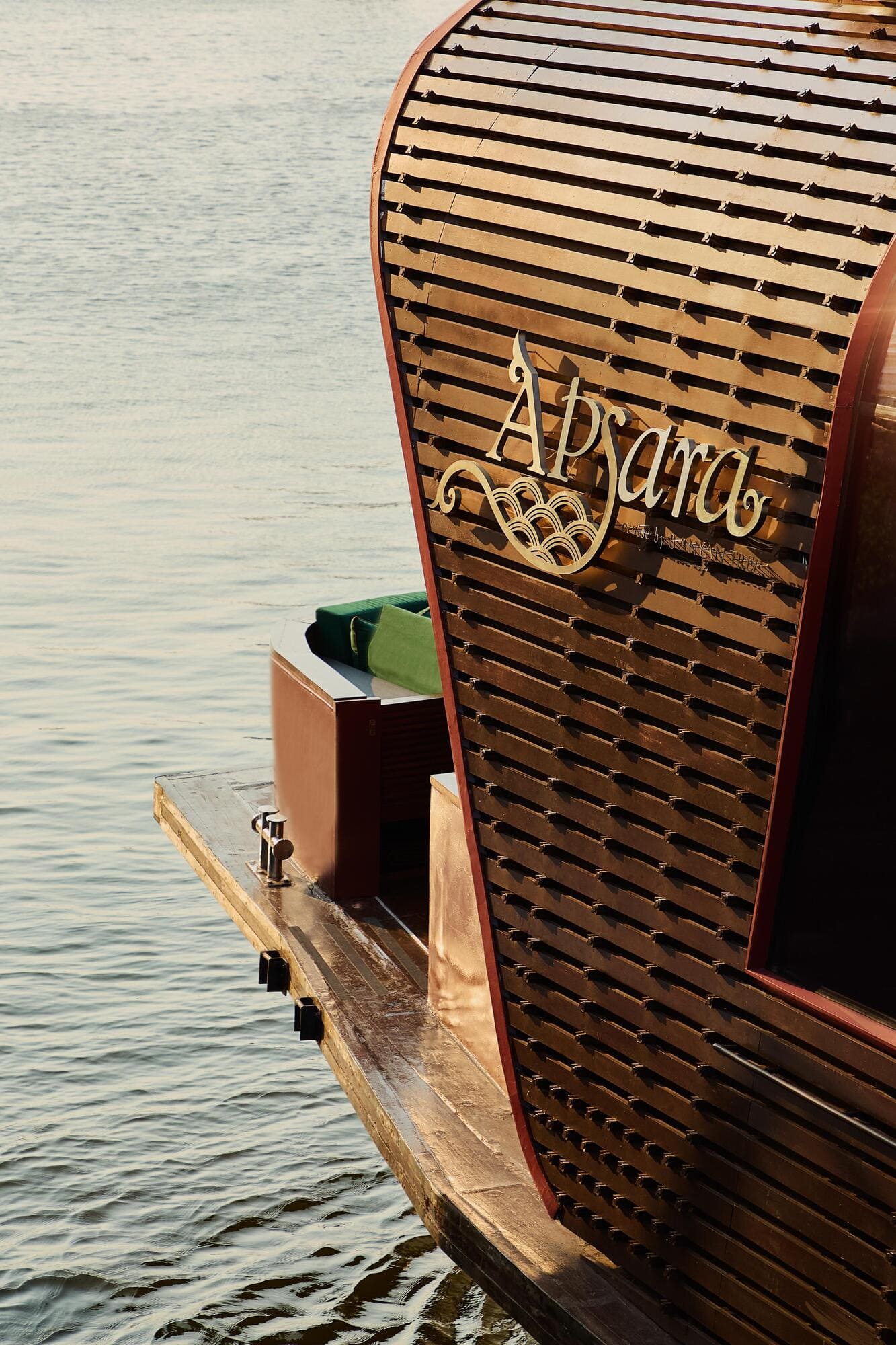
The ambitious remaking by Studio Locomotive preserves its heritage wooden cargo hull—as a below deck for motorization, full commercial kitchen, and guest restrooms—and resonates the shape of vernacular bamboo canopy in a new superstructure, modified for all-season restaurant service. The new configuration comprises three decks, with a total usable area of 245 square meters, including a 90-square-meter indoor dining.
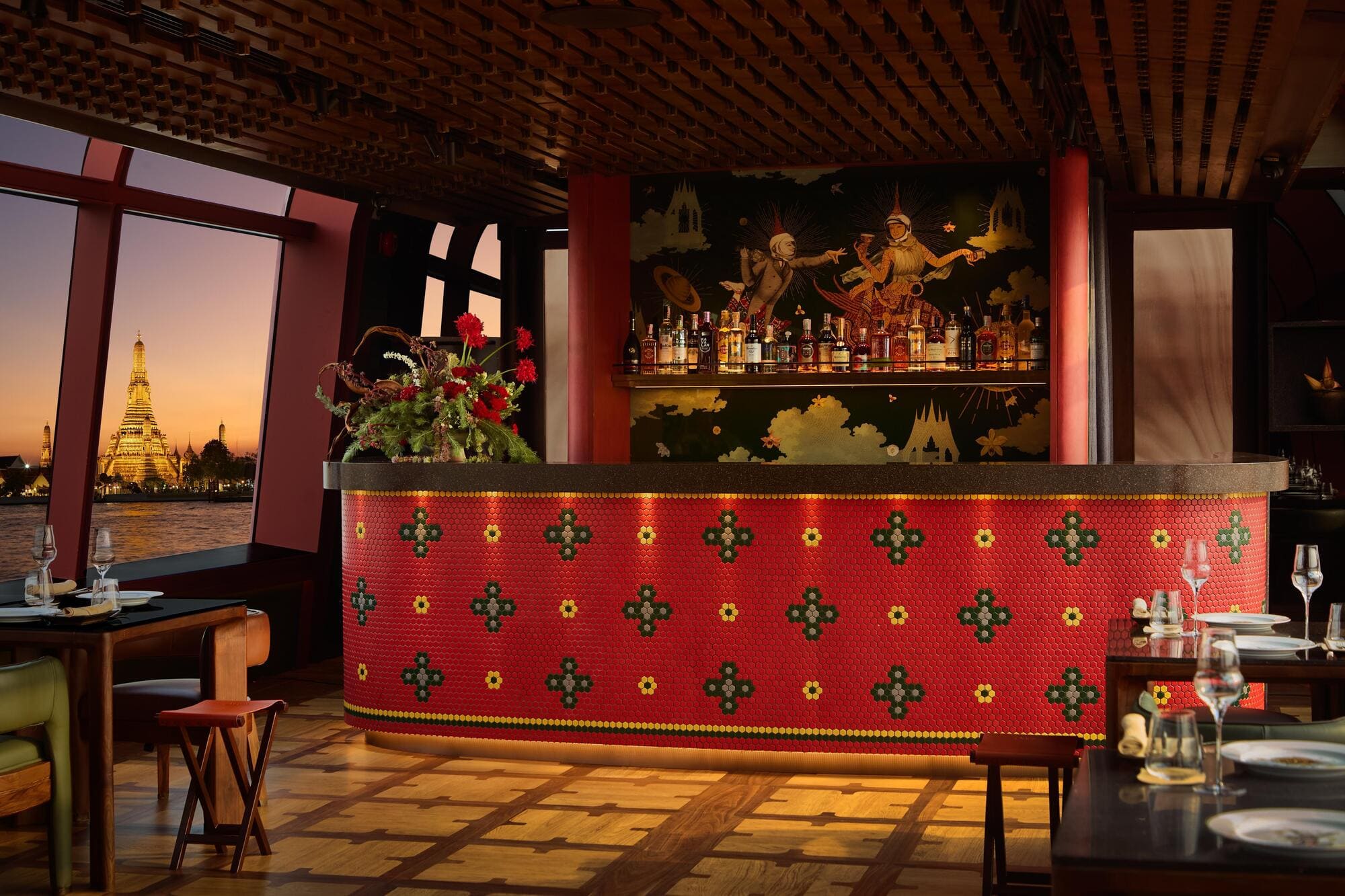
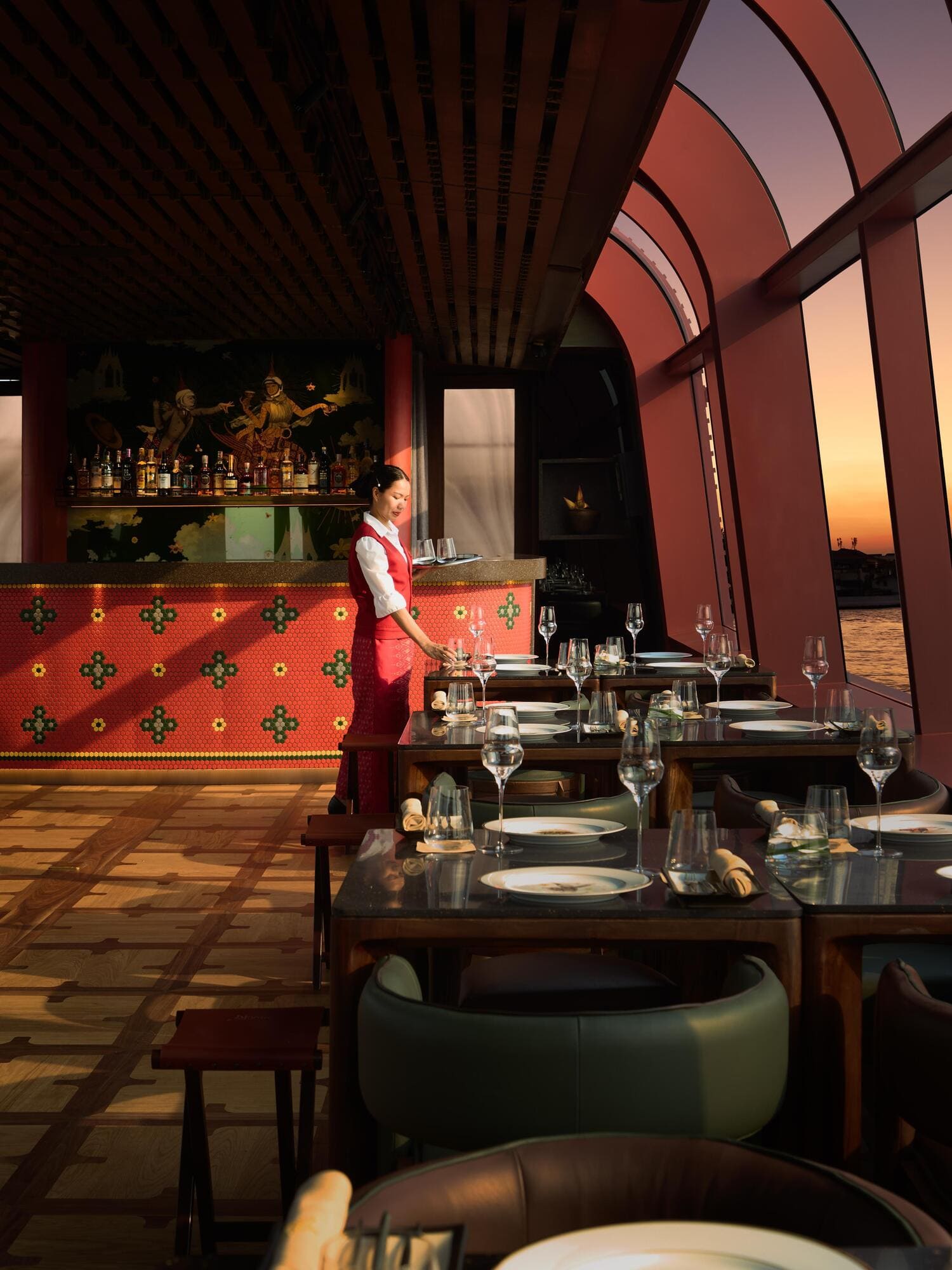
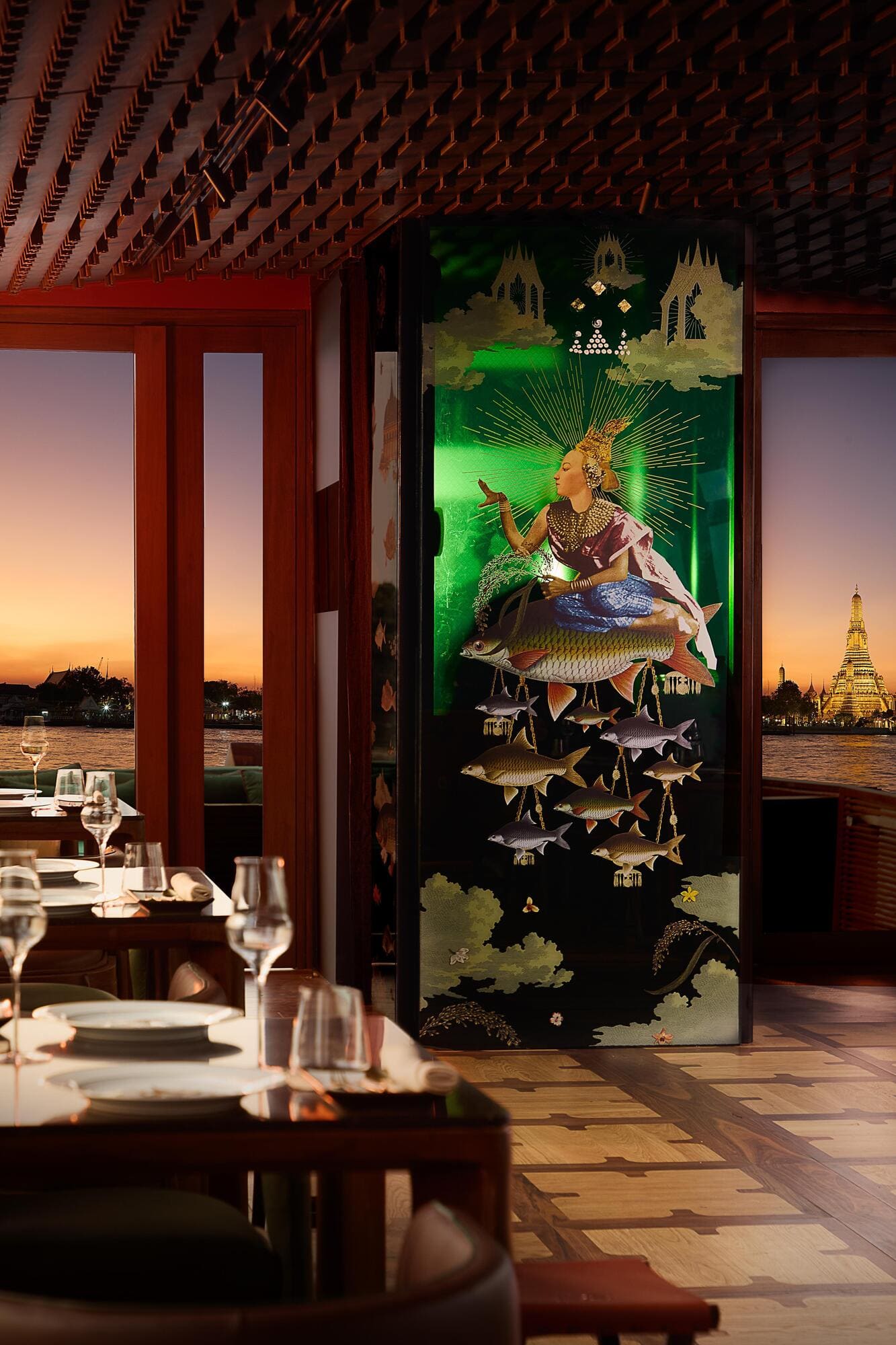
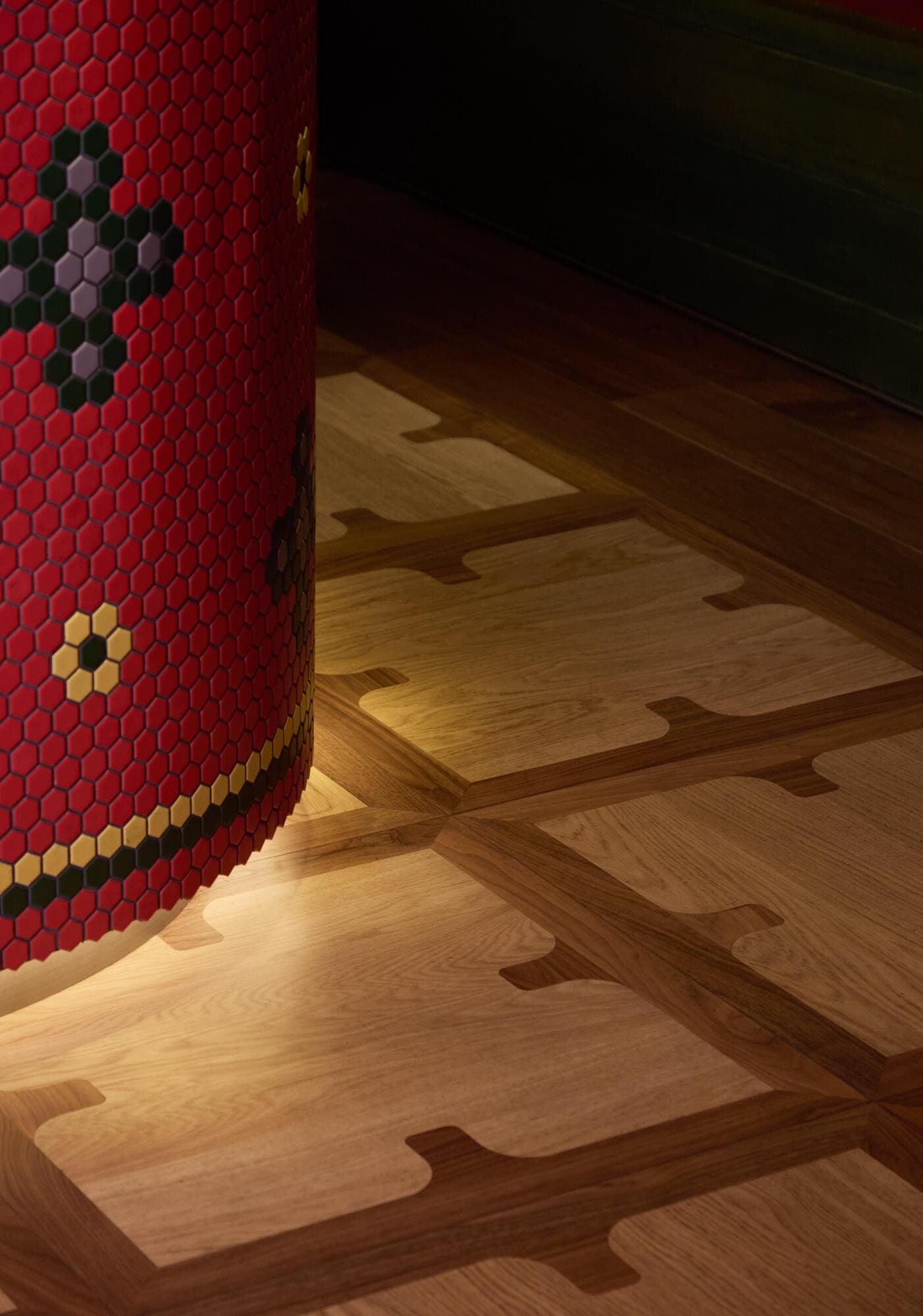
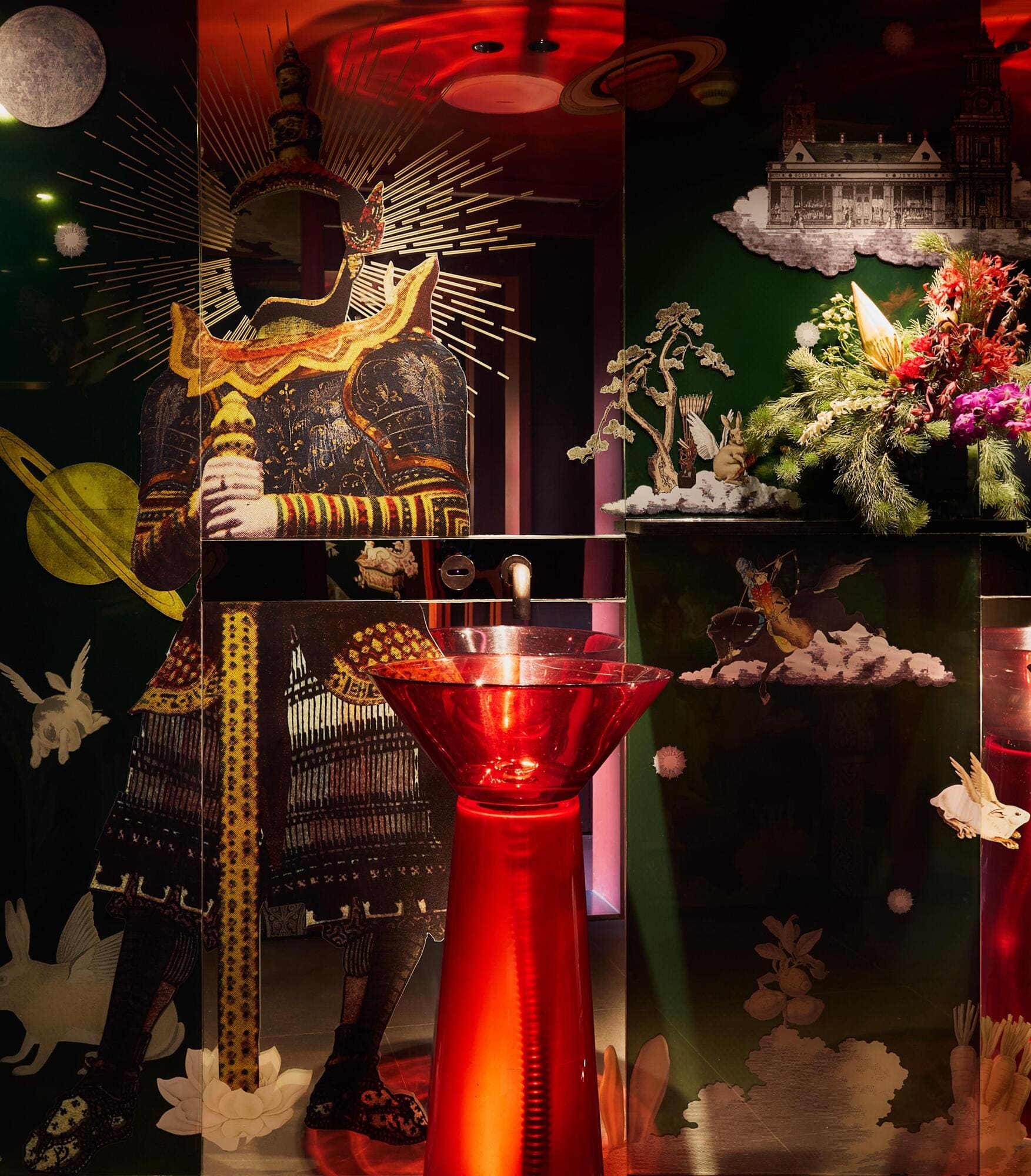
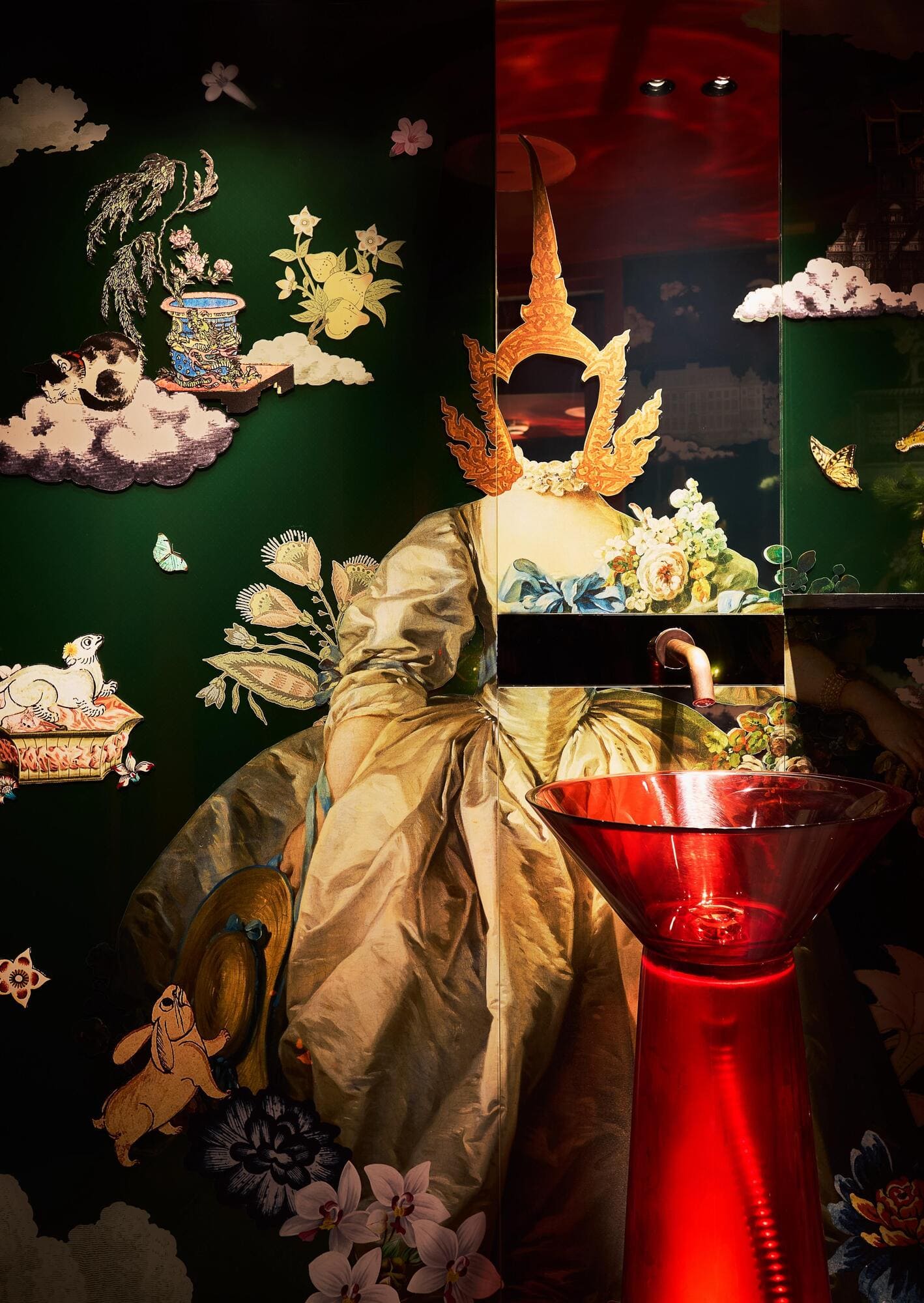
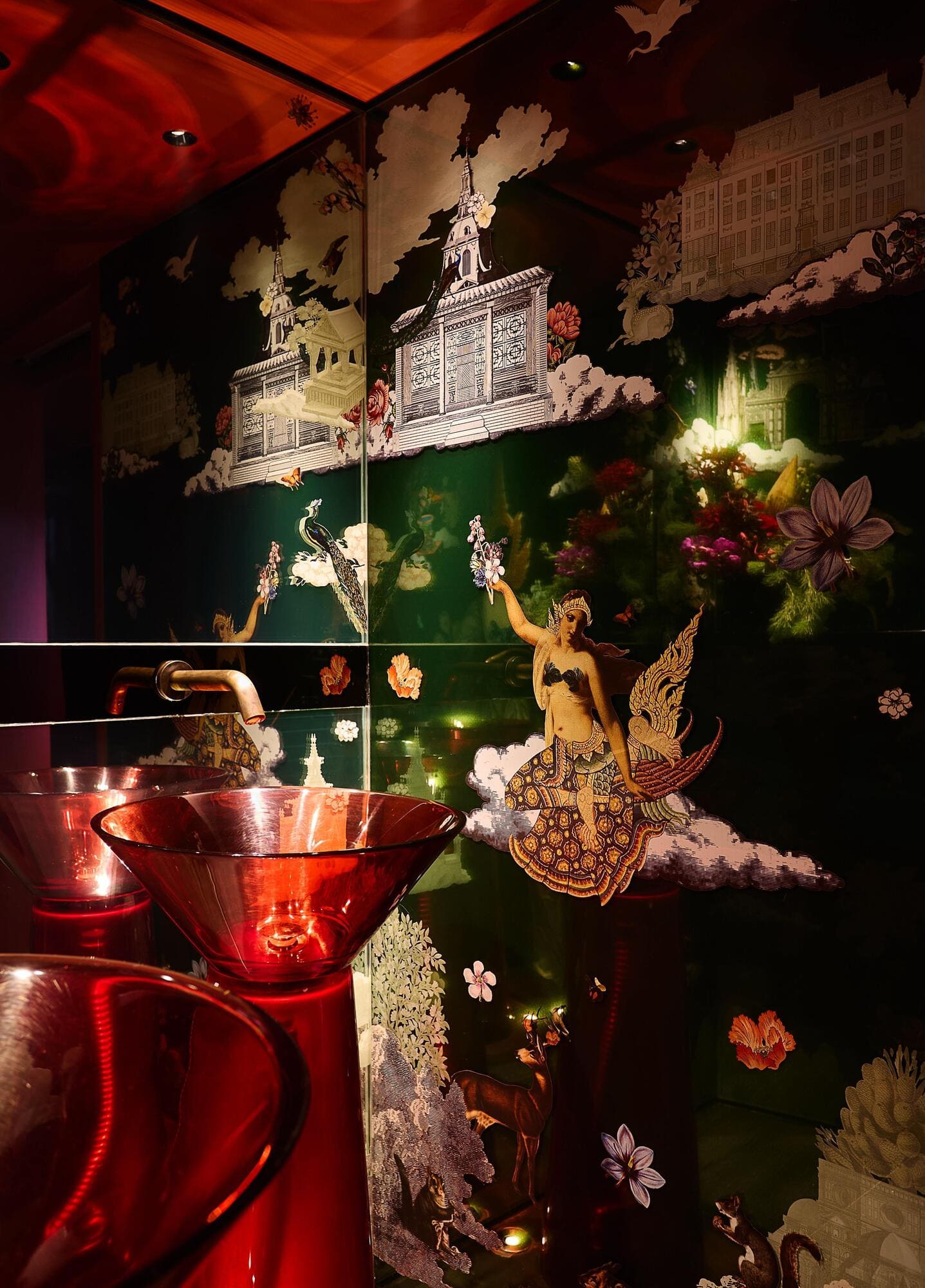
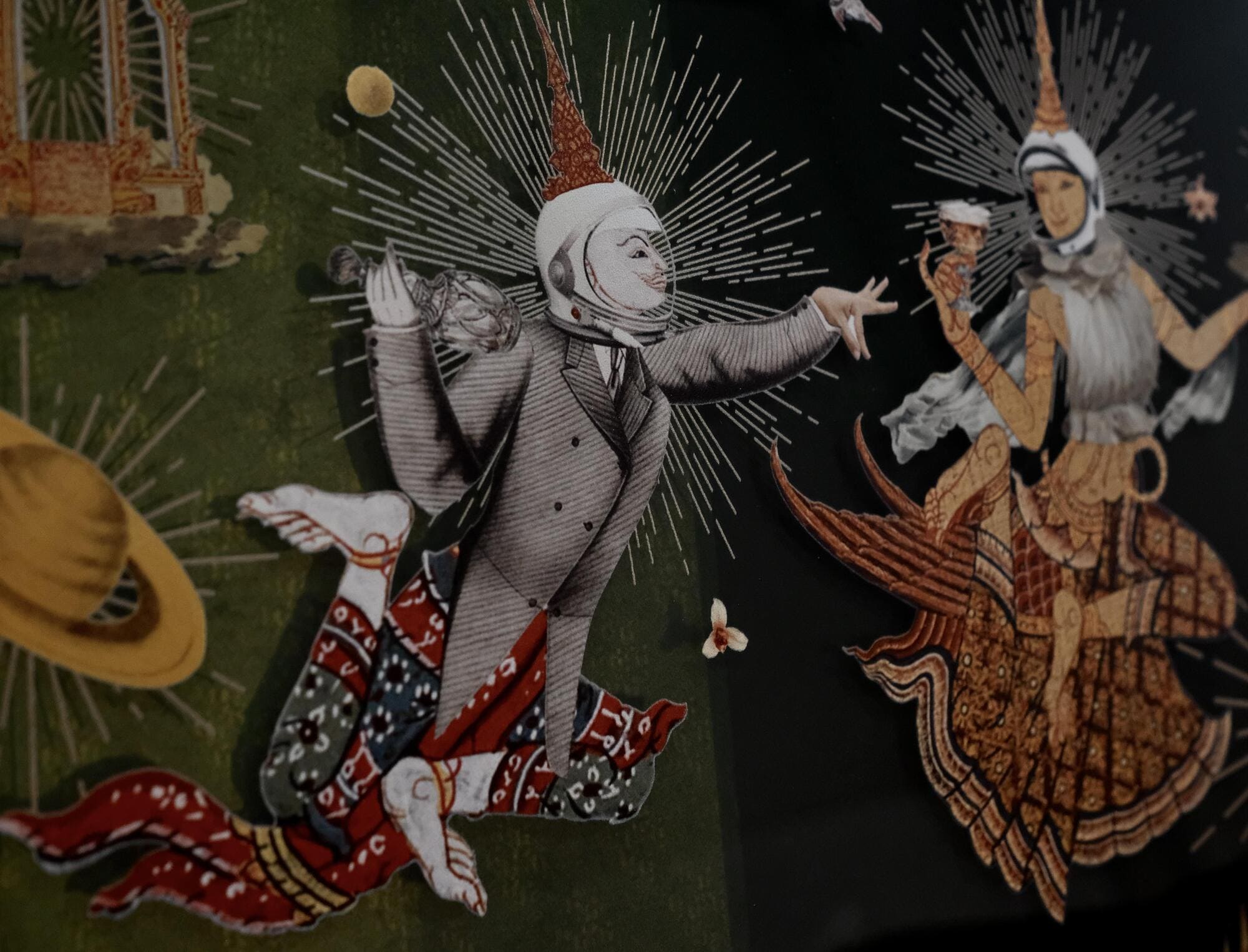
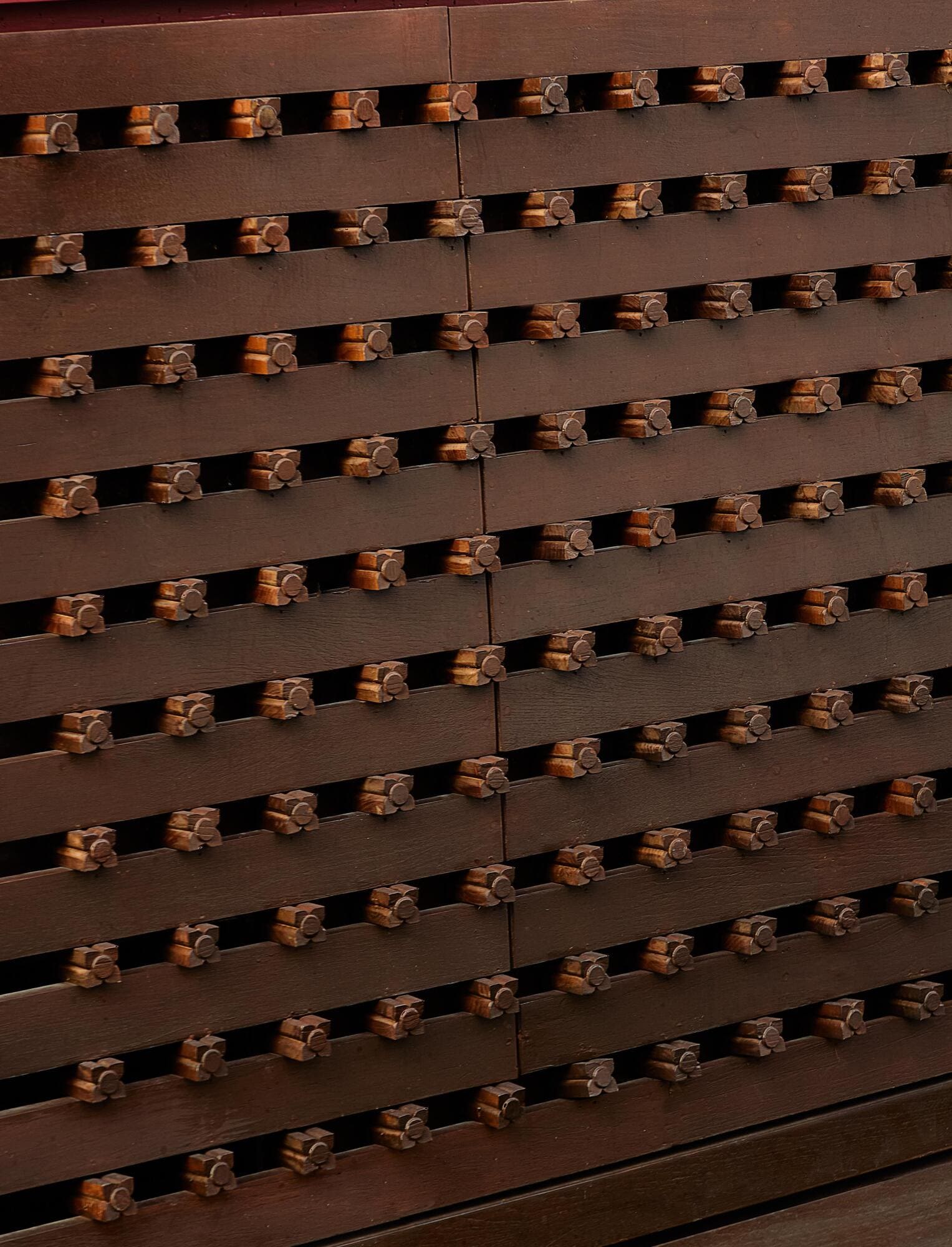
Evocative elements of Thai fine arts and architecture—such as wall murals reinterpreting Buddhist legends, auspicious Prajamyam floral motifs believed to offer protection and good fortune, and historical color palettes from glazed terracotta roof tiles on Thai temples—are reflected through fresh execution on contemporary materials, including mirror, mosaic tiles, and wooden beads.
Sharing the main dining deck are a beverage bar and a wheelhouse—disguised within a decorative green-tinted glass booth—featuring glass wall murals portraying the stories of the Rice Goddess and other mythical deities associated with agricultural abundance, redefined in modern narratives by a collage illustrator Nakrob Moonmanas.